President of the Hellenic Republic Konstantinos An. Tasoulas Inaugurates the Agricultural University of Athens’ “Green Walk”
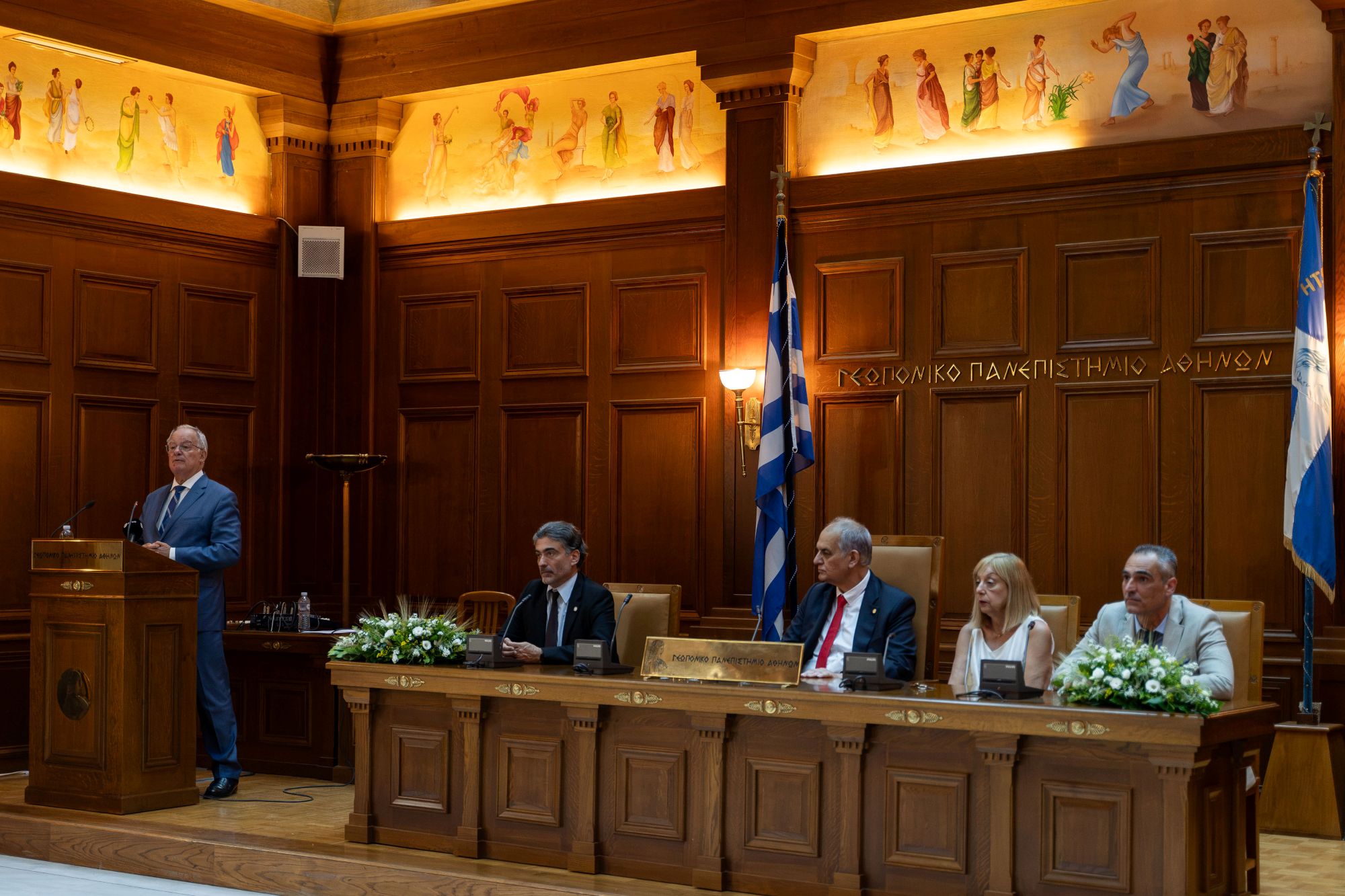
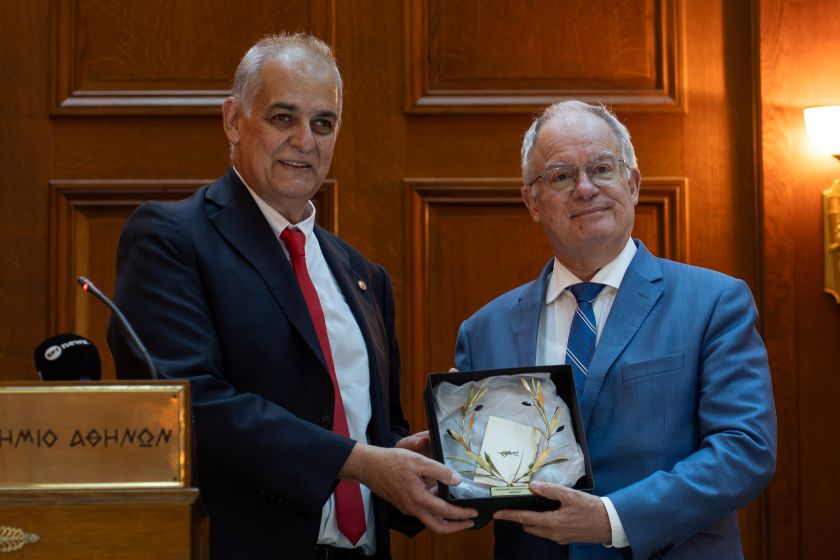
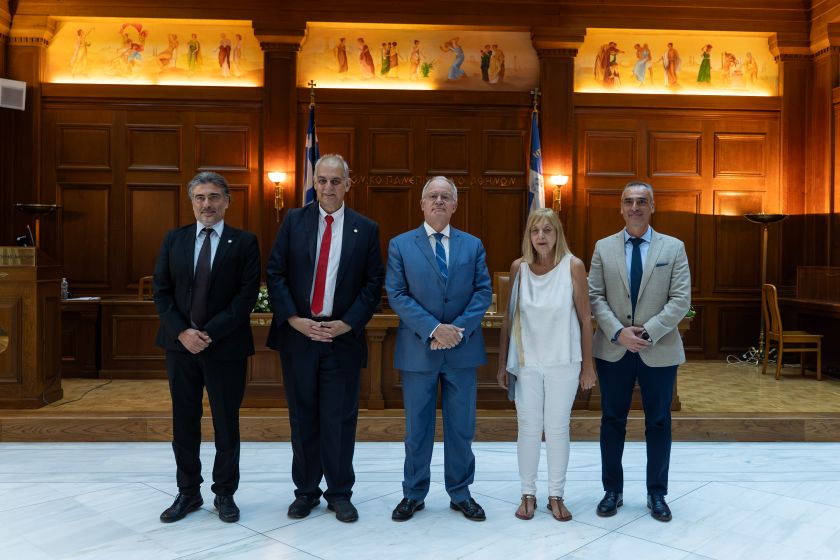
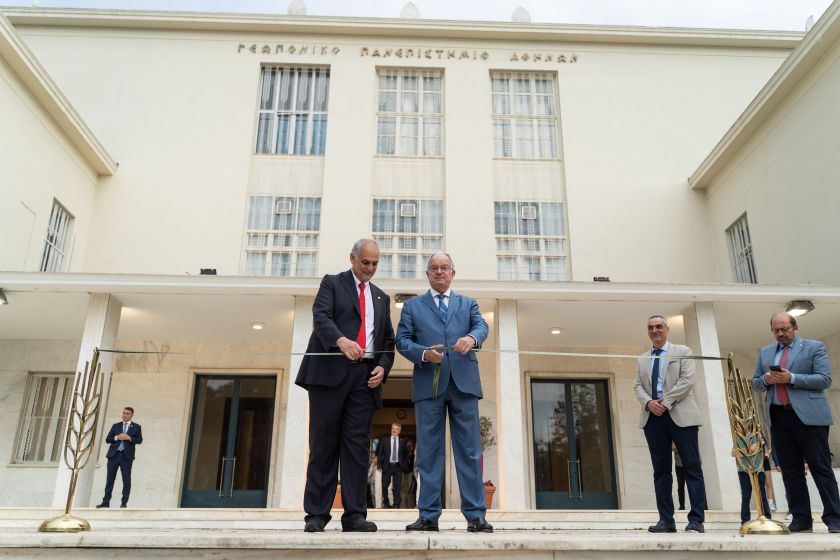
On Thursday, 9 July 2026, the official inauguration of the “Green Walk” of the Agricultural University of Athens (AUA) took place in an atmosphere of great pleasure and profound significance. The inauguration was conducted by the President of the Hellenic Republic, Mr. Konstantinos An. Tasoulas, in the presence of the University’s Rectoral Authorities, members of the Governing Council, Deans and Heads of the Schools, academic staff, and employees from across the University’s administrative services. The ceremony was also honoured by the attendance of Professor Erato Chatzisavva, Rector of the Athens School of Fine Arts, Professor Georgios Dedousis, Rector of Harokopio University, as well as representatives of the project’s contractor.
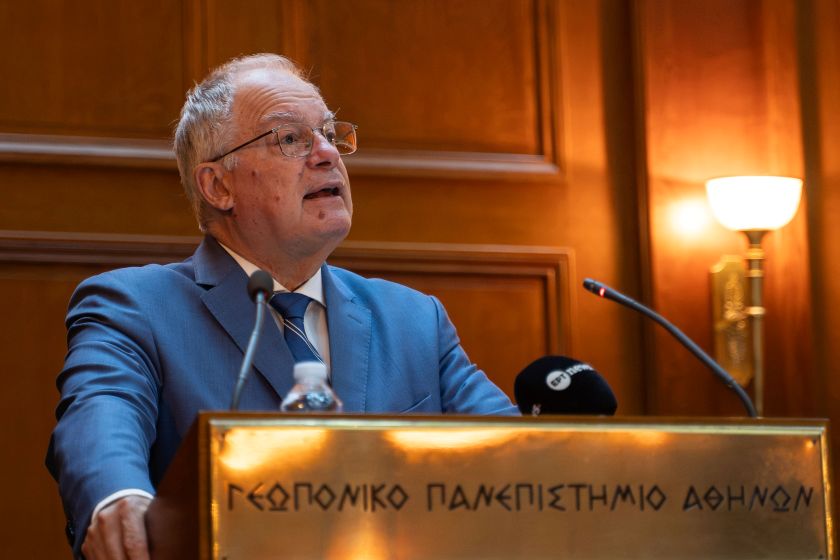
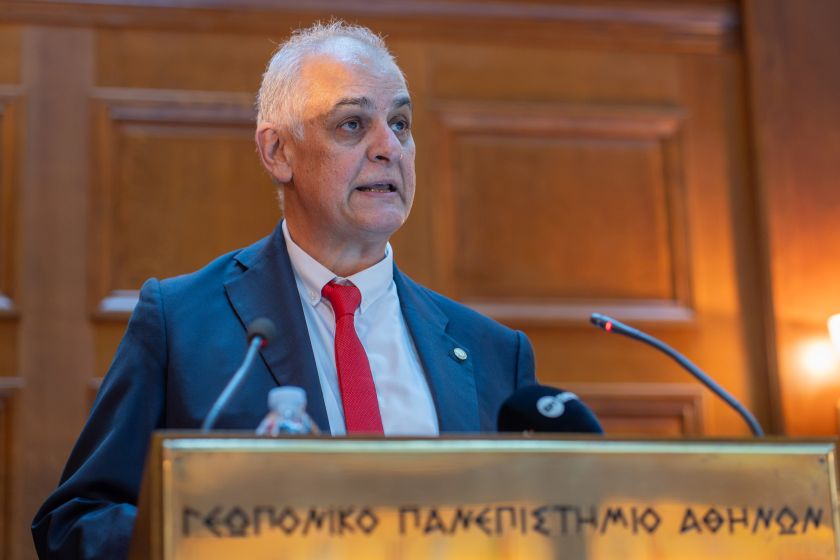
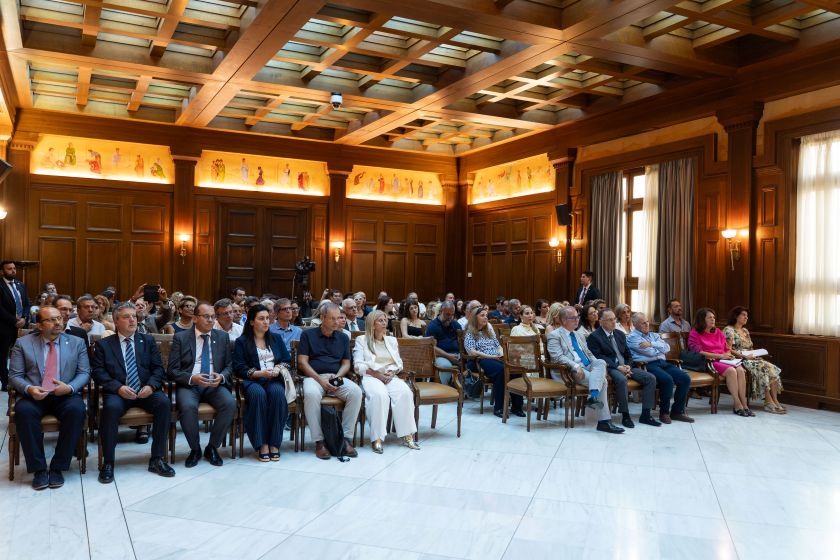
The inauguration ceremony was held in the University’s Ceremonial Hall, where welcome addresses were delivered by the President of the Hellenic Republic, Mr. Konstantinos An. Tasoulas, and the Rector of the Agricultural University of Athens, Professor Spyridon Kintzios.
In his address, the President of the Hellenic Republic stated:
“Ladies and Gentlemen,
It is with great pleasure that I am here today, in this oasis of life for the wider Attica region, which for more than a century has served knowledge and Greek agriculture.
As I was listening to the Rector, I recalled that in 1934, during the interwar period, shortly after Eleftherios Venizelos' final four-year term in office, the then Minister of National Economy, Georgios Pesmazoglou, wrote an article for the newly established journal Industrial Review (Viomichaniki Epitheorisi), with the aim of supporting an industrial sector that was only just beginning to emerge in Greece.
Pesmazoglou—a banker, economist, and leading member of the People's Party—wrote in that new journal that agriculture was, is, and would remain the cornerstone of the Greek economy. He argued that even if industry were to acquire greater importance for the Greek economy—as he predicted in 1934—it would never surpass agriculture in significance or scope, because Greece is intrinsically bound to the land and to agriculture.
I was reminded of this observation in order to underscore the great importance of the Agricultural University, which had been established only a few years before the publication of that article and whose first Director was the distinguished Spyridon Chasiotis, a native of Monodendri in Zagori, Member of Parliament for Ioannina and Senator. Widely regarded as the father of Greek agriculture, Chasiotis wrote extensively on our country's principal agricultural products—olive cultivation, viticulture, and the means of increasing the incomes of farmers in Greece's mountainous regions.
That, then, by way of tribute to Spyridon Chasiotis and to the past.
Here, in the gardens of the Agricultural University, whose history now spans more than a century, where I have the pleasure of being today thanks to your kind invitation, dear Mr Rector, every visitor feels that Aristotle's maxim comes to life: "Nature makes nothing incomplete or in vain."
We find ourselves in an exemplary, multifunctional farm, comprising extensive agricultural facilities, an arboretum, vineyards, experimental fields, ornamental gardens, greenhouses, cattle and sheep units, a poultry farm, a dairy facility, and an aquarium—one of the very few places where the city still remembers that it was once part of nature.
Walking through this small Eden, where humanity's elemental bond with the land is preserved amidst the urban landscape and alongside technological progress, one witnesses the living journey of an institution that has shaped Greek agricultural science, agricultural education and agricultural policy. It is as though its pathways, trees and plants together constitute a unique archive—one that preserves not only the past but also helps define the future.
Here, on the outskirts of the Sacred Way (Iera Odos), along which the Eleusinian procession advanced in antiquity towards the sanctuary of Demeter—the goddess associated with agriculture and sowing, but also with the bond between the Upper and the Underworld—the visitor is reminded of the history of Greek agriculture while at the same time admiring the achievements of modern scientific research. Amid the verdant surroundings of the University's gardens, one recalls the words that Xenophon places in the mouth of Socrates in the Oeconomicus: "He was right who said that agriculture is the mother and nurse of all the arts. For when agriculture prospers, all the other arts flourish as well… almost everywhere, both on land and at sea."
The Green Walk that we are enjoying today—this important project for the enhancement and renewal of the Agricultural University's campus—reminds us that sustainability is an everyday practice. It means caring for the soil, understanding the cycles of life, and recognizing that human existence is inseparably linked to its natural environment. It is our response to the timely call of the earth. There is something primordial that breathes here, for agricultural knowledge is humanity's oldest form of wisdom—the first organized science and art that laid the foundations of civilization and of organized society. As Nikos Gatsos wrote in his legendary Amorgos, "All it takes for life to blossom is a plough and a sharp sickle in a joyful hand." The tiny Harvester Vase, housed in the Archaeological Museum of Heraklion, depicts a group of joyful men celebrating the completion of the harvest. At the same time, however, agricultural knowledge is profoundly modern, as evidenced by the integration of new technologies, tools, methods and techniques that enhance productivity while contributing to sustainability.
It is no coincidence that the site on which we stand today was chosen to house, in 1920, the Higher Agricultural School of Athens, the forerunner of today's Agricultural University of Athens. Once the estate of the notorious Ottoman Voivode of Athens, Hatzi Ali Haseki, from 1774 to 1796, with its fertile lands and diverse cultivations, it was transformed by royal decree in 1835 into a tree nursery, following the transfer of the capital of the newly established Greek state to Athens. Amid the orchards and cultivated fields of a city that was slowly and hesitantly leaving behind its rural character, this very site evolved into a place of experimentation, cultivation and learning.
Following the Asia Minor Catastrophe, the School assumed an even more vital role. Thousands of people had to be resettled, cultivate the land, and rebuild their lives through agriculture. Agronomic knowledge was not a luxury; it was a prerequisite for survival. The Higher Agricultural School played a decisive role in shaping agricultural policy, advancing agrarian reform, facilitating the resettlement of refugees, organizing agricultural cooperatives, modernizing production, and promoting research aimed at improving the yield and quality of agricultural and livestock products. Its first professors and students worked with dedication and vision, often with very limited resources, to establish the scientific foundations that would underpin the country's agricultural development.
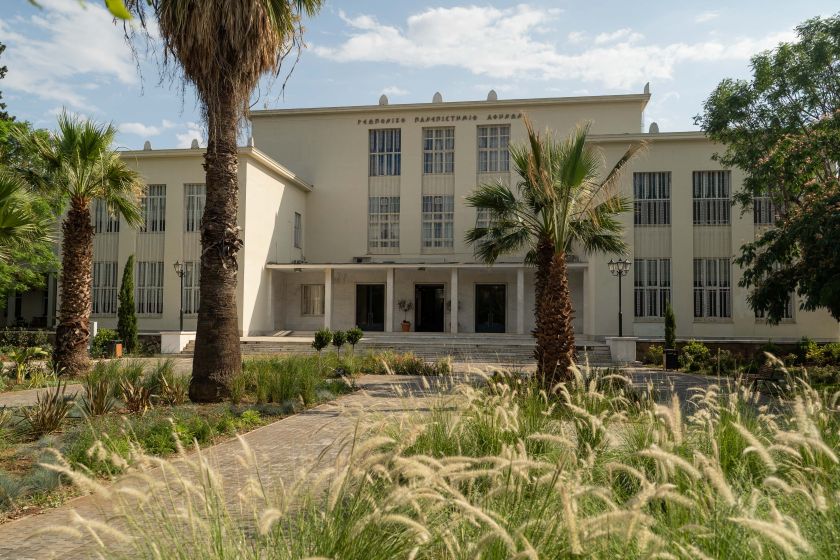
In the years that followed, the University grew alongside Greece itself. It endured hardships, was temporarily relocated, returned to its home, and was rebuilt. Its emblematic central building was completed in 1954 with the assistance of the Marshall Plan. It was a time when the country itself was being reborn, and the Agricultural University formed an integral part of that national renewal.
Today, as climate change gives rise to increasingly critical challenges, at a time when food security, the preservation of water resources and the protection of biodiversity stand at the forefront of both scientific inquiry and economic policy, the Agricultural University of Athens continues to make an invaluable contribution to the primary sector—a fundamental pillar of the Greek economy and society, with far-reaching significance for both economic development and social cohesion.
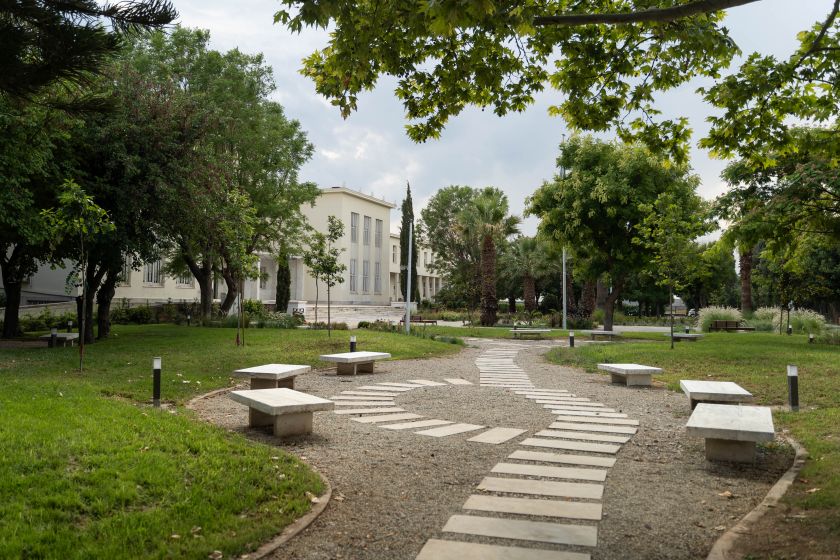
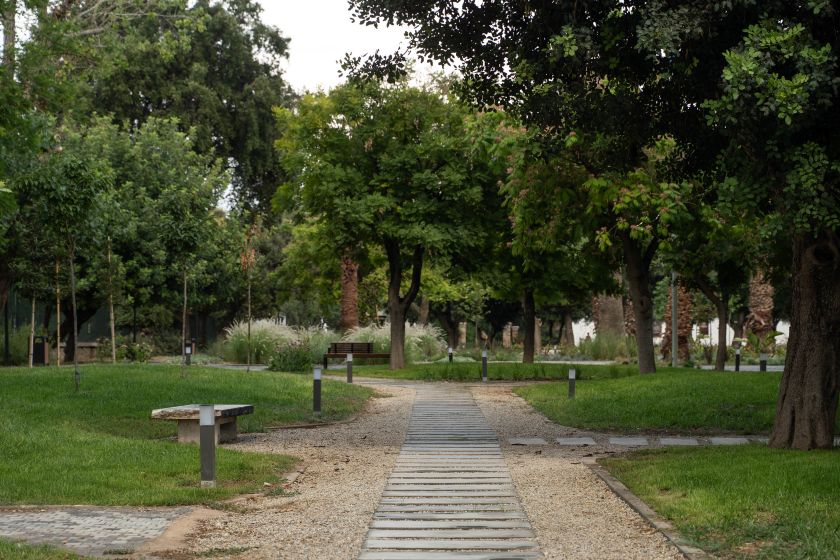
At the same time, through the enhancement of its campus environment, the University is making a broader gesture of profound social importance. By improving the local microclimate, mitigating the urban heat island effect, and reducing noise and air pollution, it offers the heavily burdened district of Elaionas a vital green lung—an invaluable asset for local residents and a welcoming environment for its students.
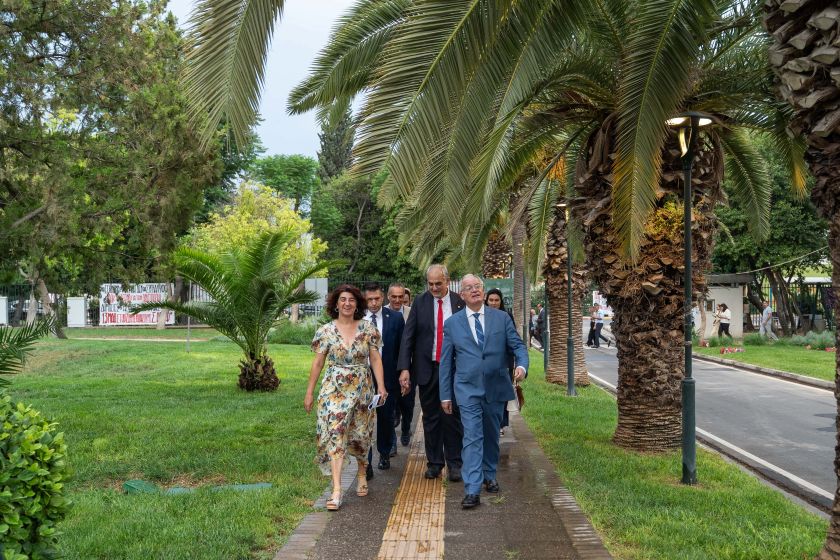
The beautifully redesigned outdoor spaces—with reduced asphalt surfaces and expanded pedestrian areas; the thoughtful thematic integration with the University's arboreta; the planting of new trees, ornamental shrubs and herbaceous plants; the new irrigation network that makes sustainable and rational use of the existing wells; and energy-efficient lighting powered by renewable energy sources—all bear witness to the University's commitment to biodiversity, ecological balance and its enduring agricultural heritage.
I am particularly pleased that the Agricultural University of Athens continues to maintain its close ties with practice and society, transforming academic knowledge into innovation with tangible applications and a driving force for development. I also welcome the University's outward-looking approach and its effective and creative contribution, and I wish you, Mr Rector, every success in continuing your valuable work with inspiration, sensitivity and courage.
We have come to know the Sacred Way (Iera Odos) also through George Theotokas' celebrated novel The Sacred Way, which forms part of his wider work The Sick and the Wayfarers. In this novel, Theotokas depicts the period of the Northern Epirus Campaign and the years of the Occupation. Yet he does not confine himself to the hardships of that era; he also invests his Sacred Way with the hope of national recovery and renewal after the ordeal.
The Agricultural University of Athens has transformed that hope of renewal into reality. Today, through this exemplary Green Walk, it demonstrates not only its commitment to caring for its own campus and the surrounding area, but also offers a model for the way public space should be designed, managed and cared for in light of today's challenges.
We can rise to the challenge of the climate crisis by making the necessary adaptations. We can follow Cavafy's wise counsel through the "manifold activity of thoughtful adaptations." The Green Walk is precisely such a "manifold activity of thoughtful adaptations" for a new era.
And if this initiative continues to expand, it will enable us to overcome this challenge as well, demonstrating that our capacity to adapt, our ability to unite nature with science, and our ingenuity can equip us to meet even this great trial. Thus, the Sacred Way remains, not only in the work of Theotokas but also in our own time, a path that symbolizes hope and renewal. And in sustaining that hope, the Agricultural University of Athens continues to lead by example.
Thank you once again, and my warmest congratulations to you all.”
The Rector of the Agricultural University of Athens, Professor Spyridon Kintzios, highlighted the significance and symbolism of the inauguration of this landmark project in his address:
"Your Excellency, Mr President of the Hellenic Republic,
Distinguished guests,
Esteemed Vice-Rectors,
Dear members of our university community,
Ladies and Gentlemen,
It is with deep emotion and great pride that I welcome you today to the Agricultural University of Athens, on a day that we may rightfully describe as historic for our Institution.
Your presence, Your Excellency, is a great honour for our entire academic community and lends particular significance to the inauguration of the Green Walk—a landmark redevelopment project that fundamentally transforms the appearance, functionality, and character of our historic campus.
We are not gathered in just any place.
We are in Votanikos, along the axis of the Sacred Way (Iera Odos), a route that for millennia connected Athens with Eleusis, the city with the land, everyday life with initiation, and knowledge with the search for meaning. It is here, in this place of profound historical importance, that the Agricultural University of Athens took root more than a century ago.
Here, generations of scientists, educators, researchers, and students have devoted themselves to the land, food, the environment, and humanity. Here, science became inseparable from production and national development. Here, both literally and symbolically, an important part of modern Greece was cultivated.
Today, through the Green Walk, this historic site acquires a new perspective.
Across an area of approximately 200,000 square metres, a comprehensive large-scale intervention has been implemented, founded on the principles of bioclimatic design and sustainable urban development. We have expanded green spaces and biodiversity, reduced impermeable asphalt surfaces, created safer and more accessible pedestrian and cycling routes, ensured meaningful accessibility for all, strengthened the campus against flood risks, and incorporated modern solutions for renewable energy, electric mobility, and sustainable water management.
Yet these are not merely technical interventions.
They represent the tangible expression of a different vision for the public university: a university that does not merely teach sustainability but puts it into practice; that does not simply research climate resilience but embodies it within its own campus; that does not speak theoretically about accessibility but strives to ensure it in everyday life; and that views green space not as decoration, but as essential infrastructure for life, education, and culture.
That is why today we are inaugurating far more than a pedestrian walkway. We are creating a new axis of campus life—a place where the natural environment, historical memory, scientific knowledge, and the daily life of the university community come together in harmony.
This is particularly significant for Athens itself—a city that seeks more green spaces, more open public areas, and greater opportunities for healthier urban living.
In the heart of the capital, the Agricultural University of Athens is home to an invaluable green lung. Through the project we inaugurate today, this space is not merely preserved; it is enhanced, unified, and revitalised. At the same time, it contributes to the regeneration of the wider Votanikos district, strengthening the University's connection with the city and its citizens.
I would like to express my sincere gratitude to everyone who believed in this ambitious vision and worked tirelessly to make it a reality: the State, the institutional and funding bodies, the Vice-Rector responsible for the project, Professor Thomas Bartzanas, the University's Technical Services, the designers, engineers, staff members, and every individual whose dedication transformed an ambitious idea into today's achievement.
I believe that today we are leaving a lasting legacy:
For our students.
For Athens.
For society.
For future generations.
Your Excellency, Mr President of the Republic, thank you for honouring this important occasion with your presence.
Welcome to the Green Walk of the Agricultural University of Athens.
A pathway that begins today, alongside another pathway that has existed for thousands of years.
And perhaps that is the deepest symbolism of this day: that upon the traces of history, we can still forge new paths towards the future.”
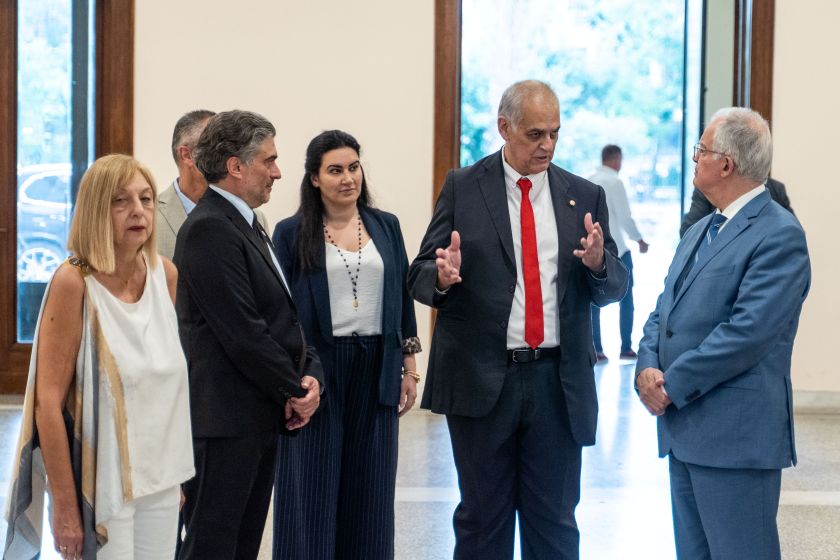
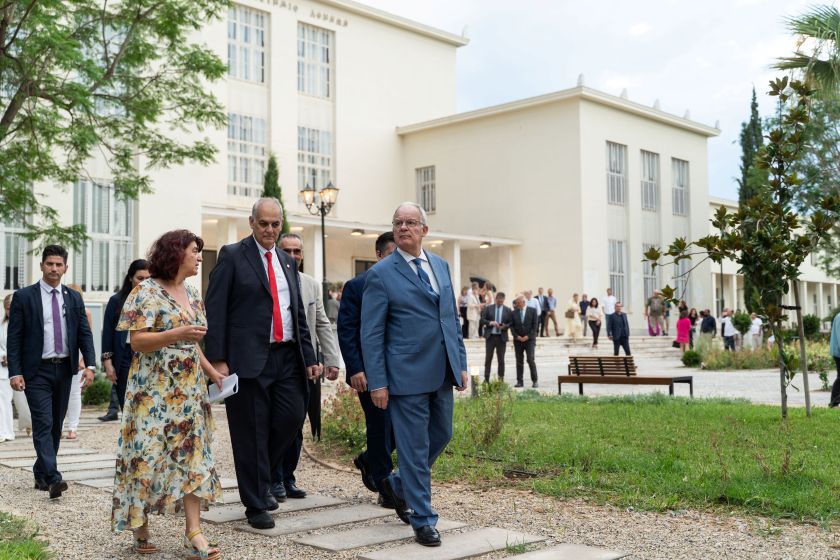
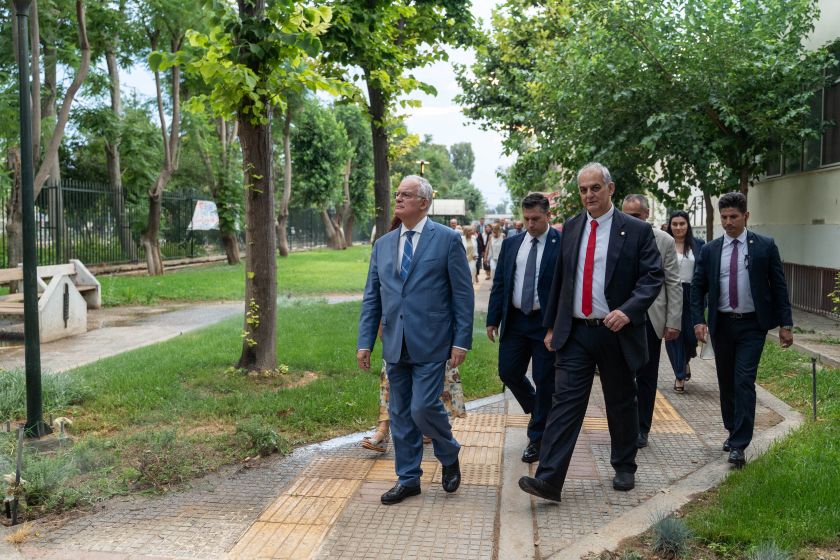
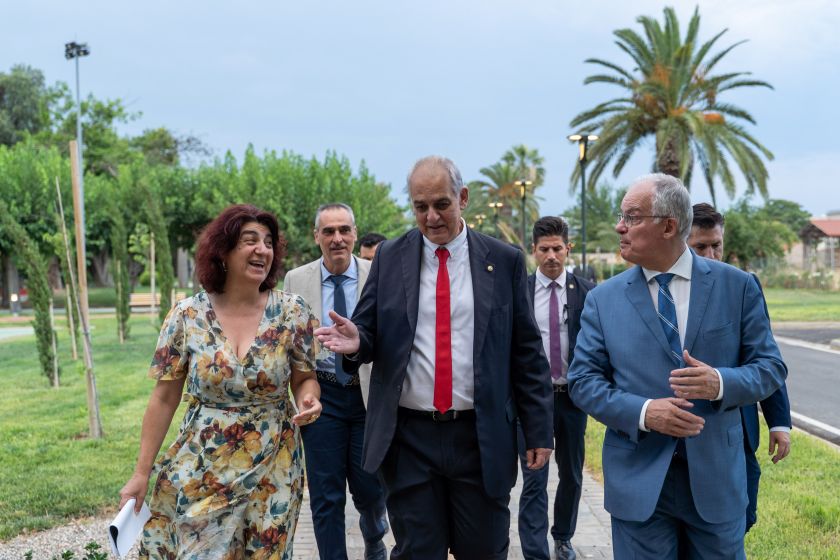
Following the ceremony, the President of the Hellenic Republic was guided by the Rector of the Agricultural University of Athens, Professor Spyridon Kintzios, on a tour of the University's newly inaugurated Green Walk.