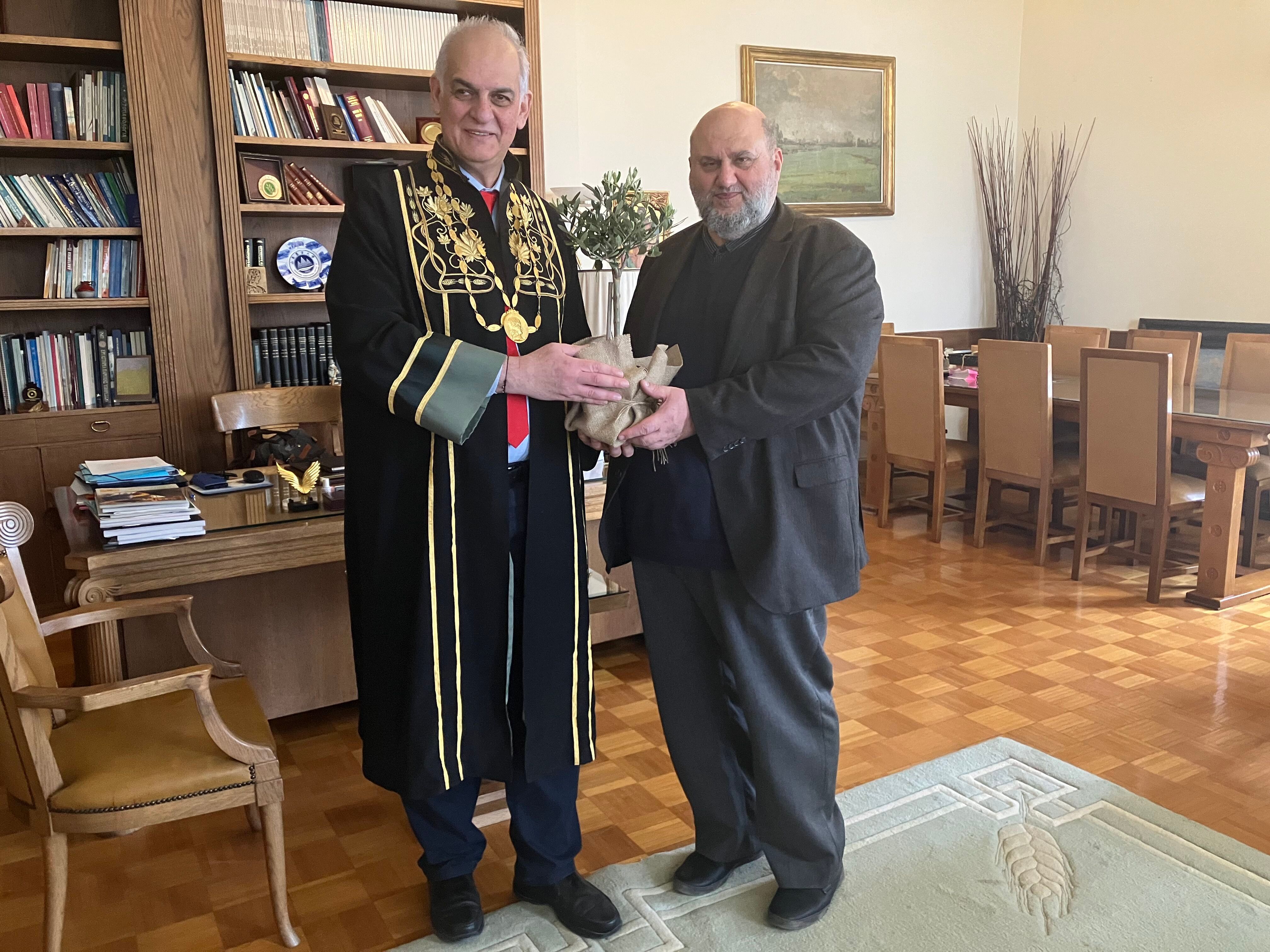

Celebration of the National Anniversary of March 25, 1821 at the Agricultural University of Athens
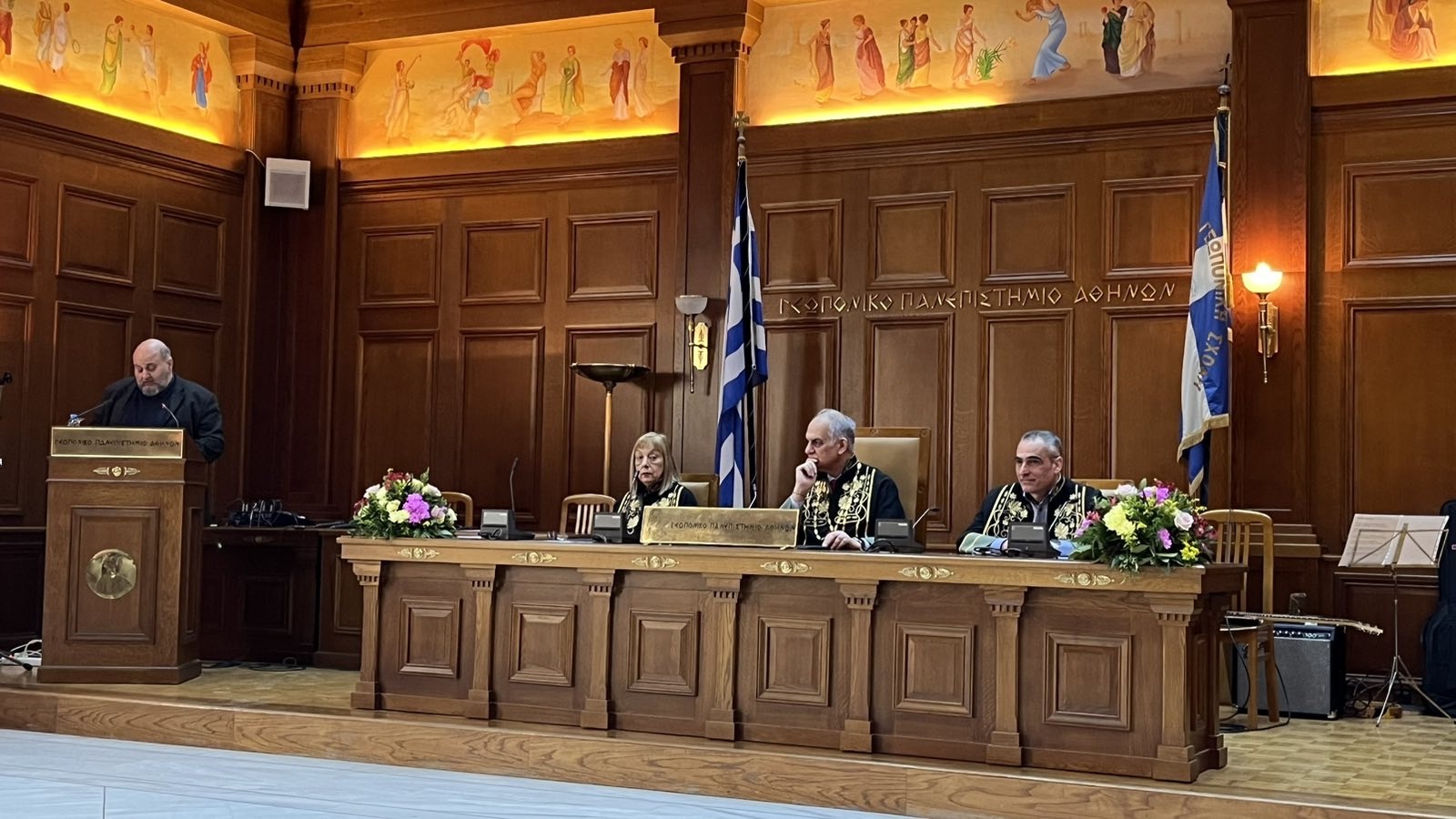
On Tuesday, March 24, 2026, the celebration of the National Anniversary of the Greek Revolution of 1821 was held in the Ceremonial Hall of the Agricultural University of Athens, in the presence of the University’s Rectorate Authorities, Deans and Heads of Schools, academic staff, administrative personnel from all services, and students of the Institution.
Addresses were delivered by the Rector, Professor Spyridon Kintzios; the Vice-Rector for the European University, Internationalization and Student Welfare, Professor Eleni Miliou; and the representative of the faculty members, Assistant Professor Konstantinos Soulis.
In his address, Rector Professor Spyridon Kintzios referred to the particular significance of the anniversary and the message of the Greek Revolution of 1821 in the contemporary era, stating: “The message of that Revolution remains profoundly relevant. In today’s world, marked by conflicts and wars — from Ukraine to the Middle East — the fundamental question resurfaces with renewed urgency: who has the right to determine the future of a people? The principle of national self-determination constitutes a cornerstone of international law and the moral order. It is the very ideal that inspired our own struggle. No people can prosper when solutions are imposed from outside, when their will is ignored or violated.”
Concluding his speech, he emphasized: “Greece, as a country born through a struggle for freedom, bears a particular responsibility to uphold the principles of international law, peaceful coexistence, and respect for human life. It must stand for peace, but also for justice. March 25 is not only a day of remembrance; it is also a reminder of responsibility. It calls upon us to reflect not only on our past, but also on our role in the present and the future. To stand with composure, yet with determination, in support of the values that constitute national and human dignity.”
The keynote address was delivered by Professor of Modern and Contemporary History at the Department of History and Archaeology of the National and Kapodistrian University of Athens, Mr. Vangelis Karamanolakis, on the topic:
“Freedom as Heritage and as Duty: The Historical Trajectories of a National Anniversary.”
Referring to the long history of this anniversary, he noted: “No commemoration takes place merely to remember the past, but also to engage in dialogue with the present and to plan the future. Throughout its historical course, which I will discuss, the memory of 1821 has been shaped by the experiences of its protagonists, the available body of historical knowledge at each time, and by an ongoing dialogue with the prevailing political and social context.”
Reviewing the history of the modern Greek state and the evolution of the national anniversary within it, he emphasized: “The political transformations brought about by the Revolution overturned the absolutist Ottoman regime and established a modern state with liberal institutions. Following the models of the French and American Revolutions, the Greeks immediately adopted constitutions, instituted representative democratic governance, ensured equality of citizens before the law, established an independent judiciary, safeguarded religious tolerance, and formed a national army. At the same time, the Revolution of 1821 constitutionally guaranteed fundamental civil liberties, regarded as natural human rights: the right to property, freedom of speech and of the press, and the rights of assembly and association.”
He further added: “Anniversaries and celebrations do not concern those who are honored, but those who honor them. They help us renew our dialogue with those who are no longer with us, reminding us of our roots, our traditions, and the legacies that can serve as guiding principles at critical moments. Just weeks ago, photographs of those executed in Kaisariani stirred our thoughts, demonstrating how the past can suddenly and forcefully enter our lives, overturning certainties and often our complacency.
It may also illuminate paths of resistance and dignity in the face of barbarity and authoritarianism, which, unfortunately, are advancing in one of the most pessimistic moments of modern world history. This is when anniversaries and their commemorations can acquire new meaning; when worn concepts and words can be renewed, and the significance of sacrifice—and of the pursuit of a free and better world—can be reilluminated. It is at such times that anniversaries show, and continue to show, the way: a path that begins in Souli and Alamana, passes through the Kaisariani Shooting Range, and reaches the present day.
This path is both our heritage and our duty.”
Vangelis Karamanolakis is Professor of Theory and History of Historiography and President of the Administrative Committee of the Historical Archive of the National and Kapodistrian University of Athens. He also serves as President of the Board of Directors of the Archives of Contemporary Social History (ASKI). His research focuses on the history of historiography, the theory of history, and the history of higher education. He has edited volumes on the seven-year dictatorship (1967–1974), the historical trajectories of Greek youth in the 20th century, the relationship between Greek and French historiography, the 1940s, the early post-dictatorship period (1974–1975), and the conceptualization of collective identities such as Hellene–Romios–Greek, among others.
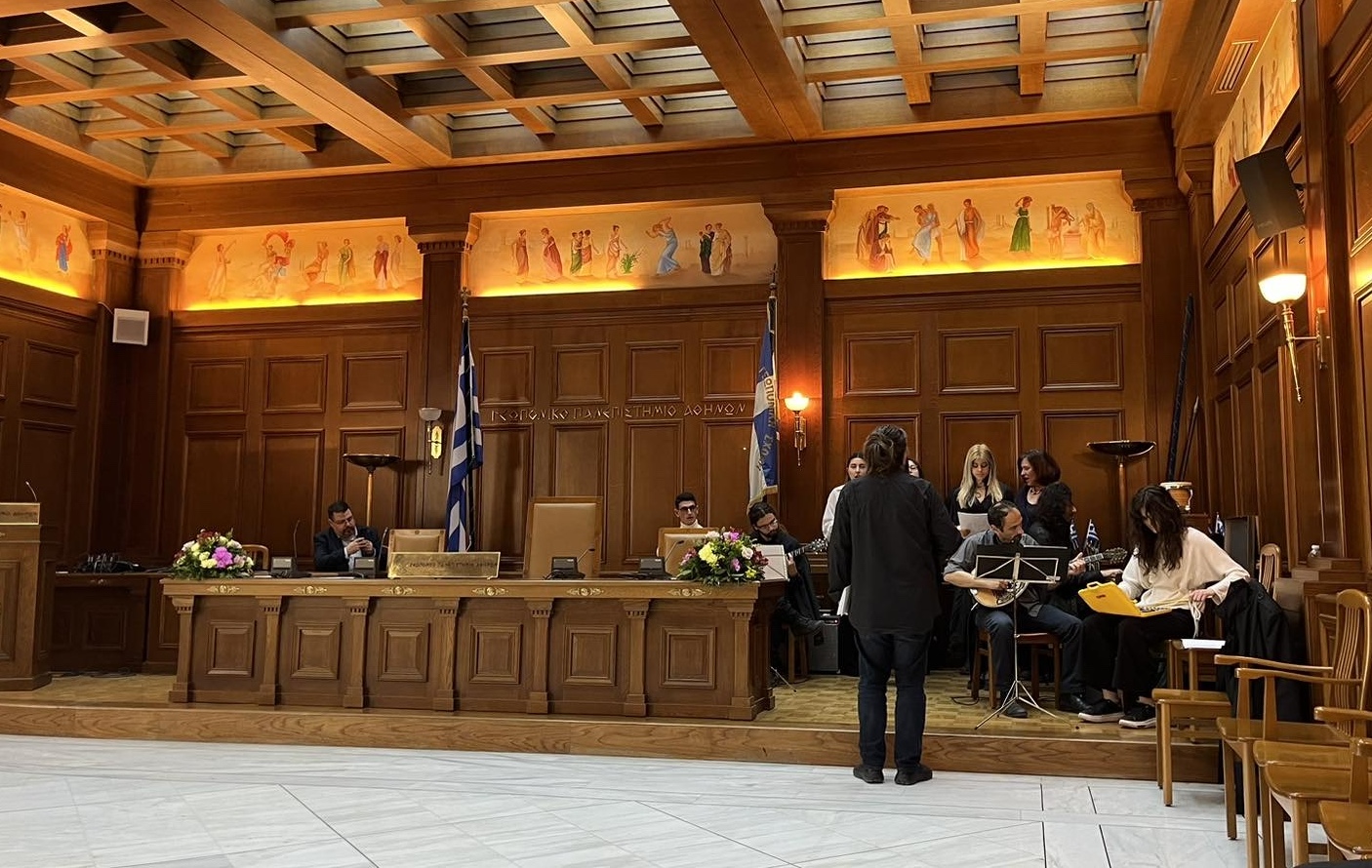
The celebration concluded with a brief musical program and the performance of the National Anthem by the University’s Music Workshop.