Agricultural University of Athens Marks World Environment Day 2026 with the Two-Day Event “Action for Climate”
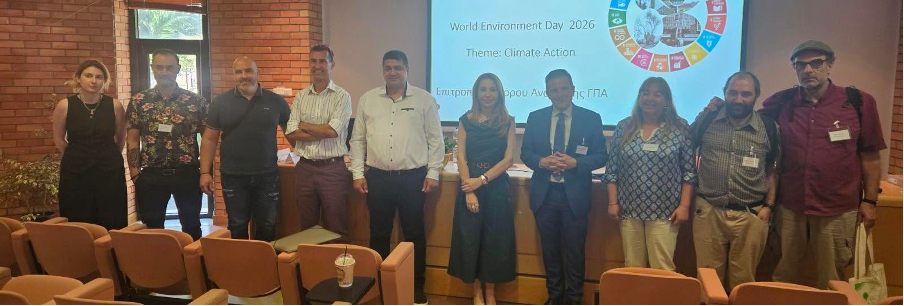
The two-day event entitled “Action for Climate”, organized by the Sustainability Committee of the Agricultural University of Athens on the occasion of World Environment Day, concluded with great success. Comprising Professor Dimitris Manolakos, Assistant Professor Panagiotis Oikonomou, Assistant Professor Chrysi Papadimitriou, and Environmental Scientist Mr. Evangelos Kyritsis, the Committee prioritized highlighting the contemporary role of the University as an open space for knowledge, collaboration, and innovation—one that connects scientific research with society and actively contributes to the promotion of sustainable development and climate resilience.
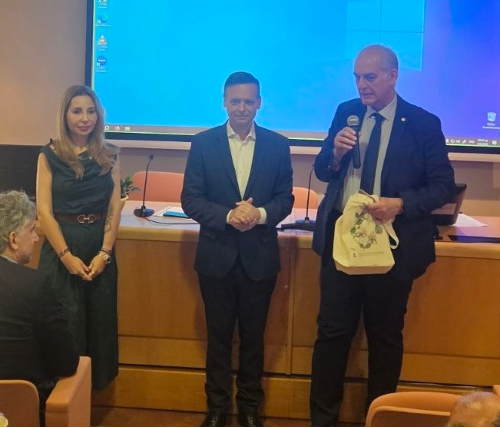
The opening session of the first day featured welcome addresses by the Mayor of Athens, Haris Doukas, the Rector of the Agricultural University of Athens, Professor Spyridon Kintzios, the Deputy Mayor for Environment and Green Spaces of the Municipality of Athens, Georgios Apostolopoulos, and the representative of the Green Fund, Argyris Kaklidis.
In his address, the Mayor of Athens emphasized that environmental sustainability constitutes a key priority of the municipal administration through the implementation of relevant policies and programmes. He referred to the particular significance of Votanikos, a historically important area in the heart of the city, where the Agricultural University of Athens—with its long history, scientific excellence, and unique character as a center of education, research, and green space—can serve as a catalyst for the creation of a modern hub for sustainable development, innovation, and environmental awareness. The collaboration between the Municipality of Athens and the University creates the conditions for an open space of knowledge and action that will enhance the area and contribute substantially to the development of a greener, more resilient, and people-centered city.
In his opening remarks, the Rector of the Agricultural University of Athens, Professor Spyridon Kintzios, highlighted the pivotal role of universities in addressing contemporary environmental challenges, emphasizing that the generation of knowledge must be closely linked to the needs of society and the city. He particularly stressed the importance of the collaboration between the Agricultural University of Athens and the Municipality of Athens, noting that this partnership creates new opportunities for the design and implementation of innovative environmental policies and initiatives with a positive impact on citizens’ quality of life. As he pointed out, effective solutions for climate resilience, urban environmental protection, and the sustainable management of natural resources can be developed through the synergy of scientific knowledge, research, and local government.
As part of the event, Dr. Chrysi Papadimitriou, Chair of the Sustainability Committee and Assistant Professor at the Laboratory of Ecology and Environmental Protection, Department of Crop Science, presented the Agricultural University of Athens Sustainability Plan. The Plan outlines the institution’s strategy for integrating the principles of sustainable development into education, research, operations, and public engagement. It establishes specific objectives for reducing the University’s environmental footprint, promoting the circular economy, and enhancing environmental awareness, positioning the Agricultural University of Athens as a modern academic institution actively contributing to the green transition and the achievement of the Sustainable Development Goals (SDGs).
As she stated in her remarks:
“The Agricultural University of Athens regards sustainable development as both a strategic choice and a fundamental mission. Through our Sustainability Plan and initiatives such as ‘Action for Climate’, we seek to transform the University into an open laboratory of innovation, education, and collaboration with society. The transition to a sustainable future is a collective endeavour in which science must play a leading role. The Agricultural University of Athens continues to invest in synergies among science, society, and public institutions, promoting actions that strengthen environmental education, the circular economy, innovation, and climate resilience.”
The first day concluded with presentations focusing on Climate Action—as designated by the United Nations for World Environment Day 2026—and its contribution to sustainable development. Topics included European climate policies, plastic and microplastic pollution, the One Health approach, climate-neutral cities, the circular economy, the importance of soil and climate for sustainable development, as well as the institutional and legal framework supporting resilience actions in response to the climate crisis.
In parallel, the session “Circular Economy and Entrepreneurship: From Theory to Practice” showcased examples of successful implementation. Businesses and social organizations presented innovative applications in recycling, reuse, bio-based materials, circular design, and social entrepreneurship, highlighting the contribution of innovation and partnerships to advancing the circular economy and sustainable development.
The event aimed to create an interdisciplinary and participatory forum where representatives from academia, public administration, local government, civil society, social enterprises, and innovative organizations could exchange experiences and best practices on climate action, the circular economy, environmental protection, and the sustainable management of natural resources.
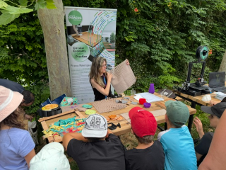
The second day of the event, entitled “Circular Economy in Practice”, was dedicated to outreach and the dissemination of knowledge to society, aiming to bridge the gap between the theoretical principles of the circular economy and their practical application in everyday life. Through a rich programme of hands-on workshops, interactive presentations, and educational activities, participants had the opportunity to explore key concepts and practices of the circular economy and gain a deeper understanding of their contribution to sustainable development and environmental protection.
The activities were designed for school students, university students, members of the academic community, and the wider public, encouraging participation across different age and social groups. Particular emphasis was placed on active engagement through activities that fostered knowledge exchange, skills development, and environmental awareness. At the same time, participants were introduced to best practices and innovative initiatives demonstrating the potential of the circular economy as a tool for sustainable resource management and the reduction of environmental impacts.
In this way, the second day contributed significantly to public awareness and informed dialogue on sustainability issues, while highlighting the importance of collaboration among educational institutions, stakeholders, and citizens in advancing a more sustainable and circular model of development.
A special highlight of the programme was the participation of the Agricultural University of Athens Sports Activities Team. Through badminton activities, children had the opportunity to combine environmental education with physical exercise, play, and well-being, demonstrating the close connection between sustainable development, health, and quality of life.
The success of the two-day “Action for Climate” event reaffirms the University’s long-standing commitment to serving as a point of reference for sustainability and environmental responsibility in Greece. Through awareness-raising activities, public engagement initiatives, and dialogue on the challenges of climate change, the University contributes substantially to strengthening environmental consciousness and promoting sustainable practices. Furthermore, the broad and strategic participation of stakeholders—including the Municipality of Athens, members of the scientific community, and citizens—demonstrates the growing need for collective action and collaboration in addressing environmental challenges. In this way, the Agricultural University of Athens continues to consolidate its role as an active driver of sustainable development and the transition towards a more resilient and environmentally responsible future.